


The Best Tiles for Outdoor Spaces: Choosing the Right Patio and Garden Tiles
There is a particular kind of optimism in a British garden in spring. The first warm weekend arrives, the furniture comes out of the shed, and suddenly the patio you have not looked at properly since October is under scrutiny. Tired slabs, mossy joints, a surface that turns into a skating rink the moment it drizzles. It is one of the most common reasons homeowners start looking at outdoor tiles, and it raises a fair question: what actually works outdoors in a climate that throws frost, rain, heat and damp at a surface across a single year?
This guide answers that properly. Not with a generic checklist, but with the reasoning behind each choice, so you can match a tile to your own space rather than simply copying a showroom photo.
Why Outdoor Tiles Are a Different Decision Entirely
An indoor floor tile lives a sheltered life. It never freezes, rarely gets genuinely wet, and is walked on in socks or soft soles. An outdoor tile has none of that protection. It has to cope with standing water, ground that shifts slightly with the seasons, UV exposure that fades weaker materials, and the freeze and thaw cycle that defines a British winter.
That last point is the one most people underestimate. Water finds its way into any tiny pore in a tile or its surface. When the temperature drops below freezing, that water expands. When it thaws, it contracts. Repeated over a winter, this cycle can crack, flake or shatter a tile that was never designed to handle it. So the question is not simply which tile looks best on a patio. It is which tile will still look that way after three or four winters.

What Tiles Are Best for Patios
For most UK patios, porcelain is the strongest all-round choice, and it is worth understanding why rather than just taking that on trust.
Porcelain is fired at extremely high temperatures, which produces a dense, hard-wearing tile with very low water absorption. That density is exactly what defends against the freeze and thaw problem described above: if water cannot soak in, it cannot expand and do damage. Porcelain is also highly resistant to fading, scratching and staining, which matters on a surface exposed to sun, garden soil and barbecue grease.
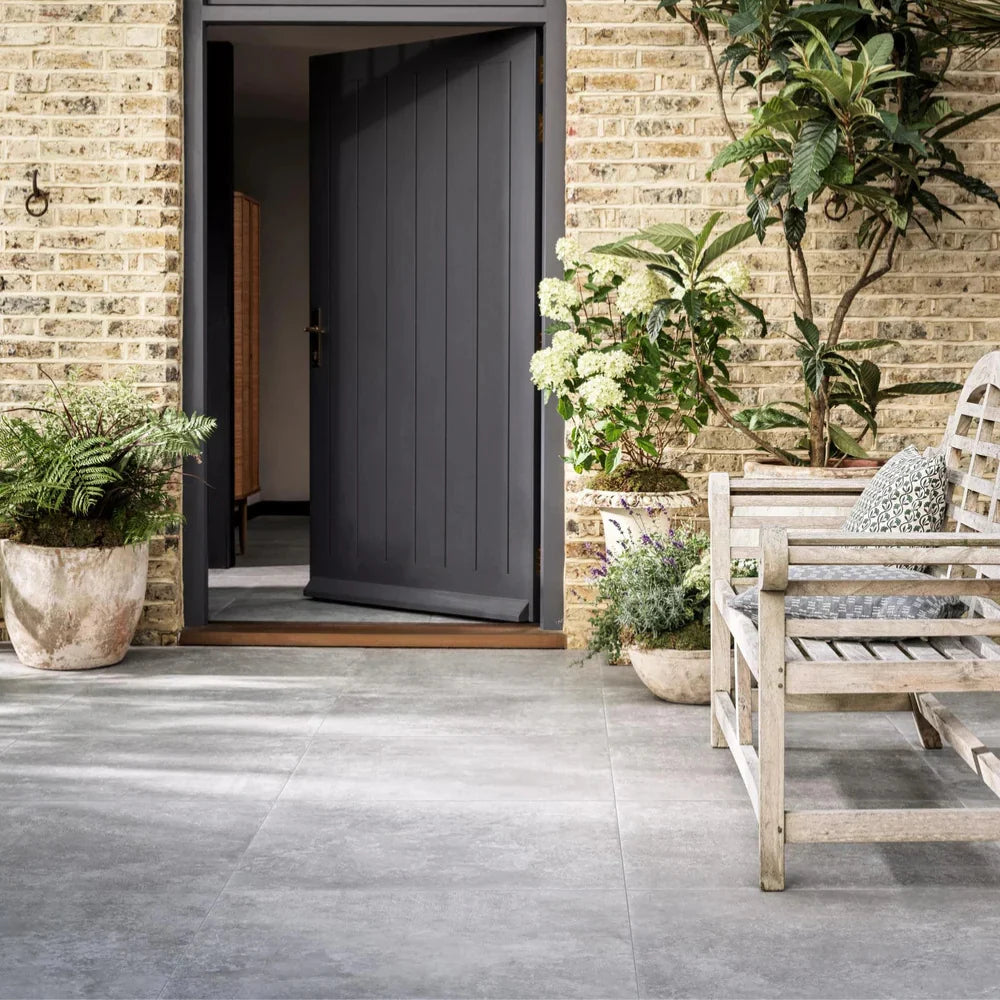
Outdoor-rated porcelain is built to take an exterior load and typically pairs a robust body with a textured or grip finish designed to stay safe underfoot when wet. Many ranges also come in large formats, which suit patios well: fewer grout joints means a cleaner, more contemporary look and less to maintain.
Within porcelain you have a genuine spread of styles. Stone-effect porcelain gives you the character of natural stone without the sealing and upkeep, and the slate-look Urban Slate range, which lists external use directly among its suitable applications, delivers that architectural, understated finish that works with almost any garden planting. If your home leans more traditional, a terracotta-effect porcelain such as Cotto Terracotta Effect brings warmth and a Mediterranean feel with the easy-care practicality of porcelain. As with any outdoor tile, check the individual product's stated suitability before ordering, and the team can confirm this for you.
What Tiles Are Suitable for Garden Spaces
A patio is one thing. The wider garden often calls for a slightly different approach, because the use changes.
Pathways and stepping areas benefit from tiles with a confident grip rating, since these are the routes people walk in wet weather, sometimes in a hurry. A textured stone-effect porcelain is ideal here.
Garden steps and level changes are where slip resistance stops being a nice-to-have and becomes a safety question. Choose a tile with a strong anti-slip finish, and consider how it will read visually: a slight contrast between the step tile and the surrounding surface helps the eye judge the level.
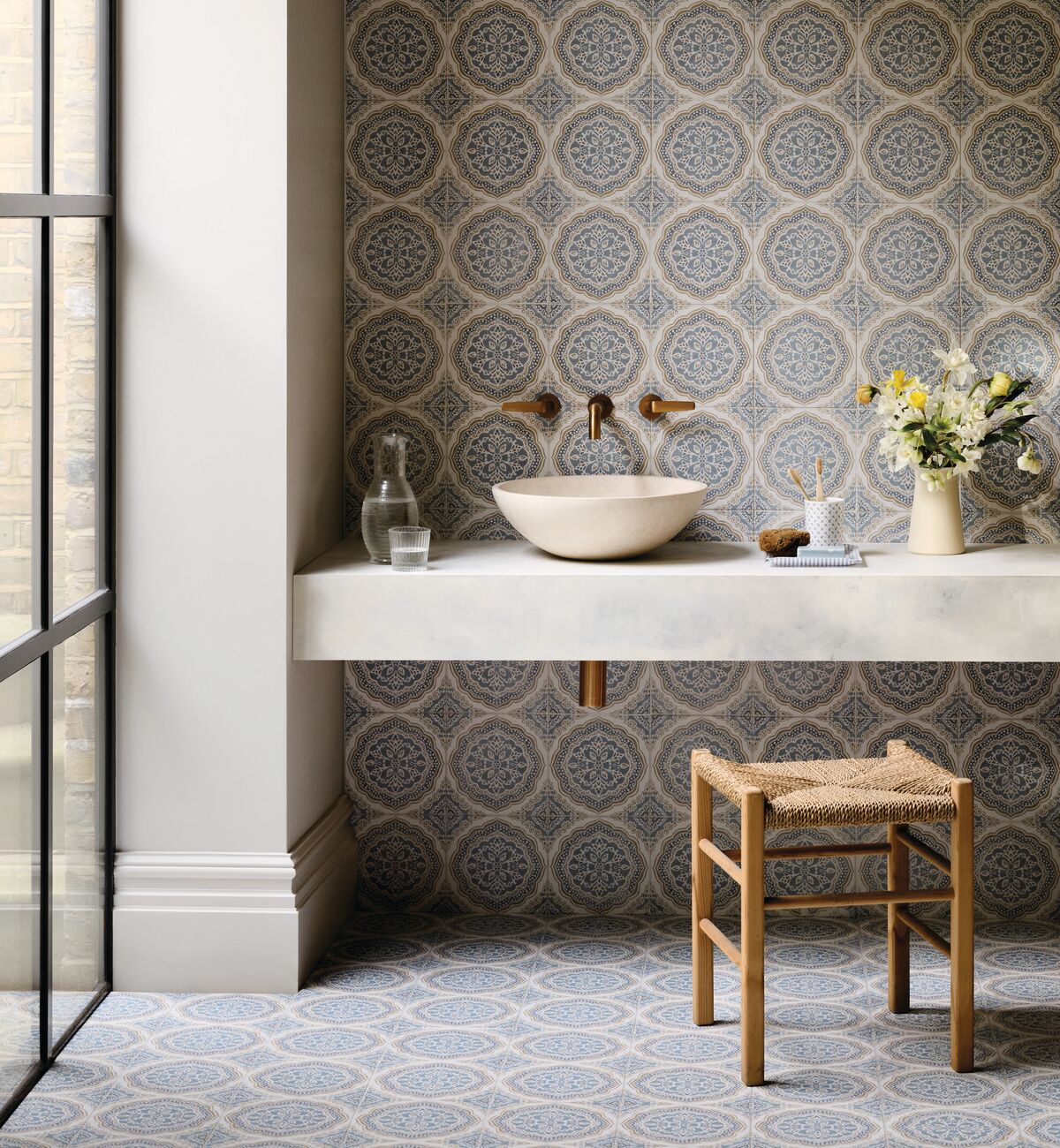
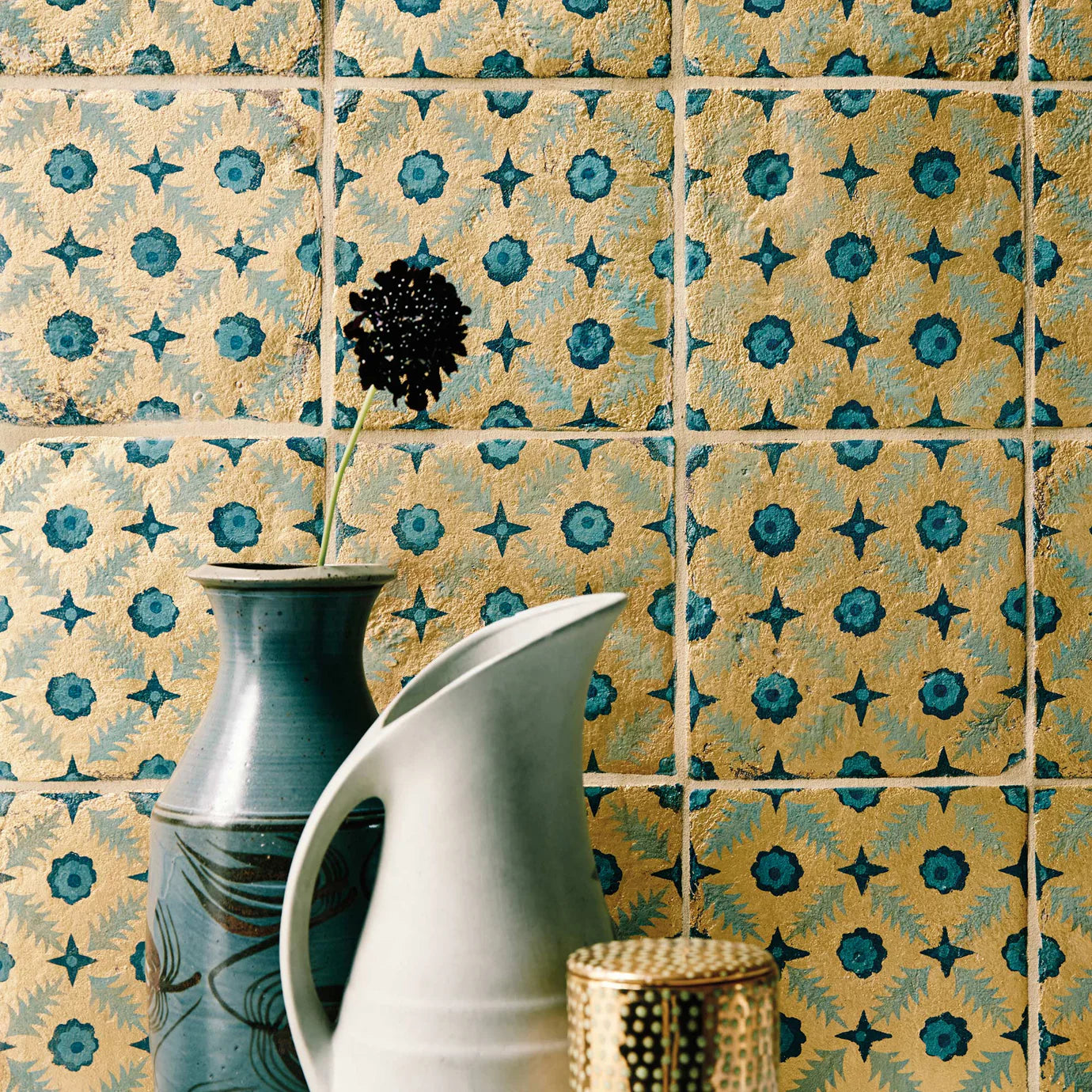
Outdoor kitchens, dining zones and seating areas are increasingly part of how UK gardens are used, and they reward a more design-led choice. This is where you can afford personality. Patterned porcelain designs, such as the Nina Campbell pieces found in the outdoor collection including Goa Aqua Ochre and Udaipur Blue, can turn a functional corner into a genuine outdoor room. As always, confirm the suitability of your chosen design for its intended use before ordering.
Indoor-outdoor flow is one of the most satisfying effects to achieve. If you have bi-fold or sliding doors, choosing a tile available in both an indoor and an outdoor-rated version, laid continuously across the threshold, visually doubles the sense of space. It is worth asking which ranges offer matching internal and external options before you commit.
A practical point for garden projects: the ground outdoors is rarely as stable as a floor indoors. Outdoor tiles should be laid on a properly prepared, well-drained base, either a full mortar bed or a suitable pedestal system, with a slight fall built in so water runs off rather than pooling. The tile is only ever as reliable as what sits beneath it.
Are Porcelain Tiles Suitable for Outdoor Use
Yes, and they are arguably the single best material for the job in the UK climate, with one important caveat: not every porcelain tile is intended for outdoor use.
A porcelain tile sold for a kitchen or bathroom floor may be perfectly excellent indoors and still be the wrong choice for a patio. The factors that make a porcelain tile genuinely outdoor-ready are the structural strength to take an exterior load, a slip-resistant surface finish, and an explicit external rating from the manufacturer.
This is the most useful habit to develop when shopping: look at the tile's stated suitability, not just its appearance. Reputable product information will tell you plainly whether a tile is approved for external use. The Urban Slate range, for instance, lists "External" directly among its suitable applications, which takes the guesswork out of it. If you are ever unsure, that is exactly the kind of question worth putting to a specialist before ordering, rather than after laying.
What Are Frost Resistant Tiles
Frost resistant, sometimes called frost proof, describes a tile that can survive repeated freeze and thaw cycles without cracking, flaking or losing its surface. It is the single most important property for any tile used outdoors in Britain.
The mechanism, again, comes back to water absorption. The lower a tile's porosity, the less moisture it can take in, and the less there is to freeze, expand and cause damage. High-quality outdoor porcelain has very low absorption, which is precisely why it handles UK winters so well. Dense natural stones such as slate and certain granites also perform strongly, although stone generally needs sealing and ongoing care that porcelain does not.
The materials to be cautious with outdoors are the porous ones: standard terracotta, many softer natural stones, and any ceramic or porcelain not rated for external use. They may look the part in June and tell a very different story by February. If long-term durability matters to you, and outdoors it always should, frost resistance is non-negotiable.
What Outdoor Tiles Are Best for UK Weather Conditions
The UK does not have one weather problem. It has several, and a good outdoor tile has to answer all of them at once.
Frost and freezing temperatures are met by low-porosity, frost resistant materials, with outdoor-rated porcelain leading the field.
Persistent rain and damp call for slip resistance. A textured or grip-finished tile keeps a wet patio safe, and porcelain's stain resistance means rain washes dirt away rather than driving it in.
Moss, algae and general greening, the bane of shaded British gardens, are far easier to manage on a dense, non-porous porcelain surface, which simply does not give organic growth the foothold that a porous slab offers. A periodic clean keeps it looking fresh.
Summer sun and UV exposure are handled comfortably by porcelain, which holds its colour rather than fading, so a patio laid this year still looks right in a decade.
Put those together and a clear recommendation emerges. For the majority of UK homes, an outdoor-rated, frost resistant porcelain tile with a slip-resistant finish is the most reliable, lowest-maintenance and longest-lasting choice you can make. Natural stone remains a beautiful option for those who love its character and do not mind the upkeep, but porcelain is the safe, sensible heart of any outdoor tiling decision.

A Few Practical Pointers Before You Buy
Order a little more than your measured area, typically around ten percent extra, to allow for cuts, the inevitable breakage, and a small reserve for future repairs. Order samples before you commit, so you can see a tile in your own light, against your own brick and planting, at different times of day. And if your project involves steps, an outdoor kitchen, or a threshold between inside and out, it is genuinely worth a conversation with someone who knows the ranges. The right advice at the planning stage prevents the wrong tile at the laying stage.
The Tile Emporium displays a selection of ranges at the showroom at 31A Bell Street, Reigate, RH2 7AD, open Tuesday to Saturday, and the team is happy to talk through suitability, slip ratings and matching indoor and outdoor options.
Ready to Transform Your Garden?
A well-chosen patio or garden tile is one of the most rewarding outdoor investments you can make: years of easy maintenance, lasting good looks, and an outdoor space you actually want to spend time in. Browse the full range of durable, frost-proof designs in the outdoor tiles collection and the dedicated garden and patio tiles collection, and find the surface your garden has been waiting for.
Leave a comment
This site is protected by hCaptcha and the hCaptcha Privacy Policy and Terms of Service apply.